
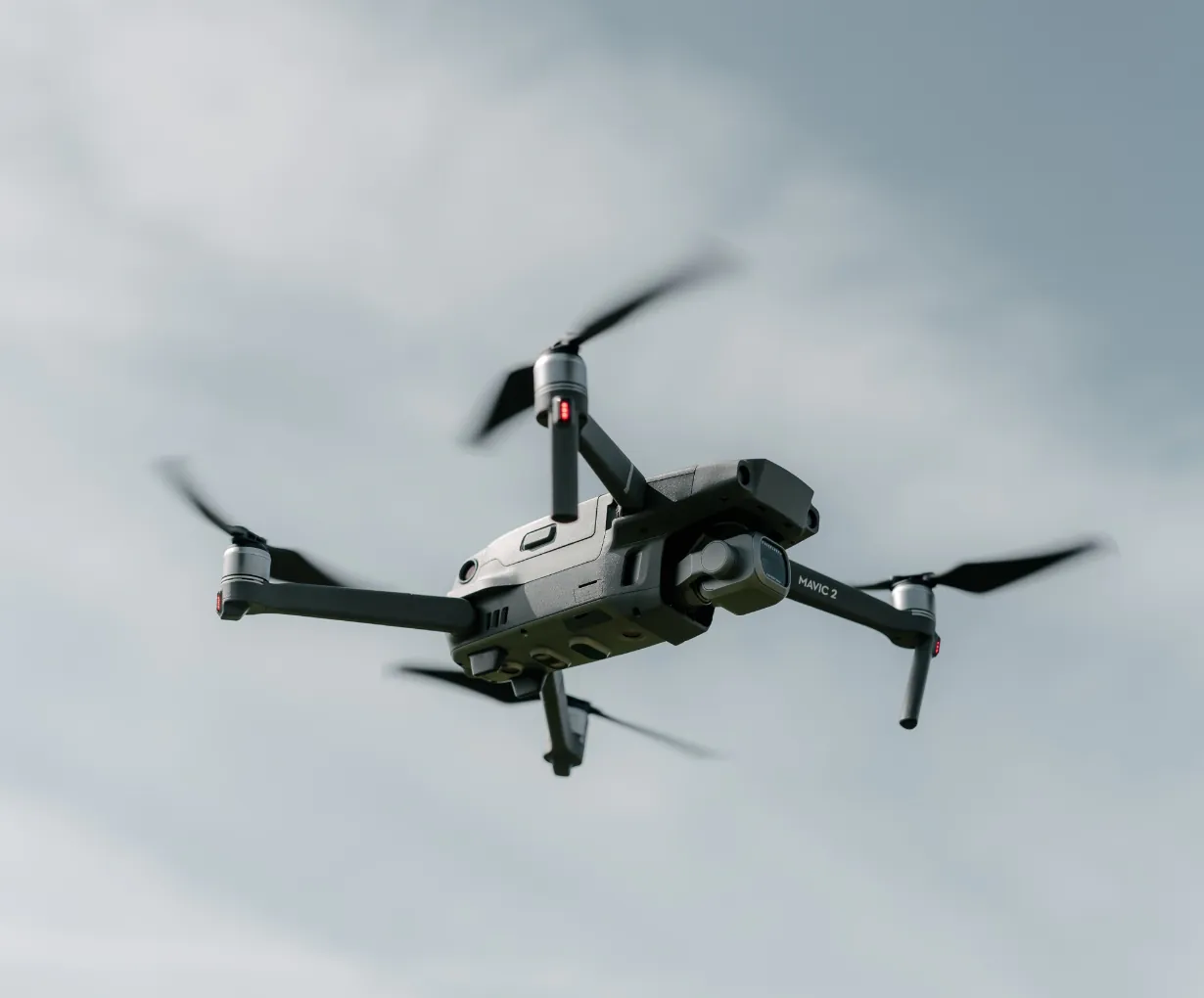

For decades, drones have been symbols of surveillance, logistics, and hobbyist innovation. But their true potential lies in integration with the human body — not as separate machines, but as extensions of our clothing and exoskeletons. Imagine a jacket that deploys micro-drones for navigation in low visibility, or an exosuit that coordinates with hovering assistants to lift loads, scout terrain, or provide cover. The sky doesn’t just belong above us anymore — it can move with us.
Miniaturization is driving this vision forward. Today’s micro-drones are lighter, quieter, and smarter, capable of carrying cameras, sensors, or even small payloads. Advances in battery chemistry and wireless energy transfer could one day allow them to stay airborne for hours, recharging directly from the garments we wear. In this future, clothing isn’t static fabric; it’s a launchpad, a hub of distributed intelligence.
The military and first responders are already experimenting with this convergence. Firefighters equipped with exoskeletons could deploy heat-sensing drones that scout unstable structures before they enter. Search-and-rescue teams could carry swarms embedded in backpacks, clothing, or helmets that fan out to find survivors. Even personal security could evolve: wearable systems that silently release drones to monitor surroundings, light a dark path, or create a protective perimeter.
Beyond utility, there’s the potential for collaboration between human and machine. Imagine construction workers using wearable rigs that offload heavy lifting to exoskeletons while drones coordinate materials in real time. Athletes could train with drones that track movement, analyze form, and provide adaptive resistance through tethered systems. The result is not just augmentation, but synergy — human skill amplified by aerial intelligence.
The design challenge is integration. For drones to feel natural as part of clothing, they must be unobtrusive until activated, and reliable enough to inspire trust. Fabrics will need to conceal mechanisms without sacrificing comfort, while exoskeleton frames must harmonize with flight systems. It’s not just engineering — it’s choreography between air and body.
Of course, this future raises questions. How do we regulate drone-wearables in public spaces? How do we protect privacy and prevent misuse? And how do we ensure safety when machines operate so close to skin and bone? These questions aren’t barriers, but invitations to innovate responsibly.
The convergence of drones, clothing, and exoskeletons paints a future where mobility is no longer bound by muscle alone. With the sky literally on our shoulders, humanity may move into an era where personal space isn’t just defended or extended, but actively orchestrated. The next leap in wearable technology might not be on our wrists — it could be hovering just above them.